Skip to content
Delhi, Delhi, 110014

Business hours

Happiness yoga

Monday
5am-10pm
Tuesday
5am-10pm
Wednesday
5am-10pm
Thursday
5am-10pm
Friday
5am-10pm
Saturday
5am-10pm
Sunday
5am-10pm

You can anytime during the day with your query.

+919953224615

Latest Posts & Updates

Fresh stories, announcements and offers about Yoga Instructor, straight from our business.

Please try the new PubMed Labsexperimental website.

Search ↓ Full text Yoga and physical exercise - a review and comparison. Review article Govindaraj R, et al. Int Rev Psychiatry. 2016. Show full citation Abstract Yoga is a multifaceted spiritual tool with enhanced health and well-being as one of its positive effects. The components of yoga which are very commonly applied for health benefits are asanas (physical postures), pranayama (regulated breathing) and meditation. In the context of asanas, yoga resembles more of a physical exercise, which may lead to the perception that yoga is another kind of physical exercise. This article aims at exploring the commonalities and differences between yoga and physical exercise in terms of concepts, possible mechanisms and effectiveness for health benefits. A narrative review is undertaken based on traditional and contemporary literature for yoga, along with scientific articles available on yoga and exercise including head-to-head comparative trials with healthy volunteers and patients with various disease conditions. Physical exercises and the physical components of yoga practices have several similarities, but also important differences. Evidence suggests that yoga interventions appear to be equal and/or superior to exercise in most outcome measures. Emphasis on breath regulation, mindfulness during practice, and importance given to maintenance of postures are some of the elements which differentiate yoga practices from phys

Read full post

Please try the new PubMed Labsexperimental website.

Search ↓ Full text Yoga and physical exercise - a review and comparison. Review article Govindaraj R, et al. Int Rev Psychiatry. 2016. Show full citation Abstract Yoga is a multifaceted spiritual tool with enhanced health and well-being as one of its positive effects. The components of yoga which are very commonly applied for health benefits are asanas (physical postures), pranayama (regulated breathing) and meditation. In the context of asanas, yoga resembles more of a physical exercise, which may lead to the perception that yoga is another kind of physical exercise. This article aims at exploring the commonalities and differences between yoga and physical exercise in terms of concepts, possible mechanisms and effectiveness for health benefits. A narrative review is undertaken based on traditional and contemporary literature for yoga, along with scientific articles available on yoga and exercise including head-to-head comparative trials with healthy volunteers and patients with various disease conditions. Physical exercises and the physical components of yoga practices have several similarities, but also important differences. Evidence suggests that yoga interventions appear to be equal and/or superior to exercise in most outcome measures. Emphasis on breath regulation, mindfulness during practice, and importance given to maintenance of postures are some of the elements which differentiate yoga practices from phys
Please try the new PubMed Labsexperimental website. post imageRead full post

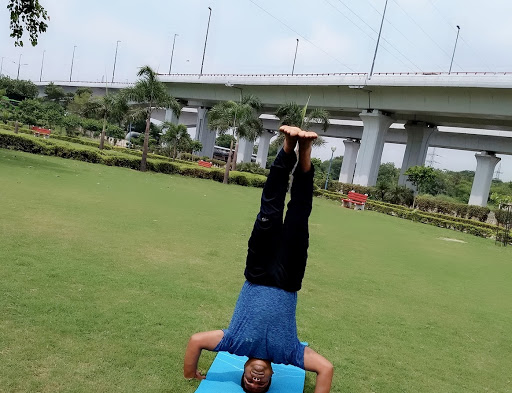
This is Niraj,workig as a yoga teacher since last 15 years,currently I am working Indian yoga se…

This is Niraj,workig as a yoga teacher since last 15 years,currently I am working Indian yoga service my post is senior Yoga teacher l done my yoga course from murarjidesai institute l have two years diploma in yoga& Naturopath my passion for spreading awareness on Yoga for health& health yoga is way of life an art of right living or an integrate system for the benefit of the body,minnd & inner sprit yoga power yoga, mediation.I have also treated students suffering from asthma, arthritis, acidity, anxiety, Bronchitis, Backache, Blood pressure, Constipation, Diabetes, Depression, Frustration, Eye problem, Insomnia, Indigestion, Mental Tension, sinusitis, Spondylitis & weight reduction etc.We will be benefited from introducing yoga into your everyday life begin and watch how your life improves. Our sansthan provides dedicated yoga instructor for personal call and allow us to help you, towards a Healthier and Happier life. Yoga has a complete message for humidity.9953224615

This is Niraj,workig as a yoga teacher since last 15 years,currently I am working Indian yoga  se… post imageRead full post

Definition of Namaste

Nama means bow, as means I, and te means you. Therefore, namaste literally means "bow me you" or "I bow to you." How to make the Namaste gesture To perform Namaste, we place the hands together at the heart chakra, close the eyes, and bow the head. It can also be done by placing the hands together in front of the third eye, bowing the head, and then bringing the hands down to the heart. This is an especially deep form of respect. Although in the West the word "namaste" is usually spoken in conjunction with the gesture, in India, it is understood that the gesture itself signifies Namaste, and therefore, it is unnecessary to say the word while bowing. We bring the hands together at the heart chakra to increase the flow of Divine love. Bowing the head and closing the eyes helps the mind surrender to the Divin

Definition of Namaste post imageRead full post

The use of ought to is similar to should, but

Chakras are circular (or flower petal shaped) vortexes of energy lying across seven different points on our spinal column. The seven chakras are connected to different glands and organs in the body and are responsible for uniform distribution of “Chi” (also called “Qi” or Praana or life energy) through them. When there is a disruption in this life energy or a blockage in any one or more Chakras, the individual may suffer from health or mental issues. Thus, the Chakras form the energy ecosystem of every individual. A deficiency in this ecosystem can wreak havoc in the different areas of life. Each Chakra is also associated with specific chakra colors. In this brief guide, we shall study the different chakra colors as well as the areas of life the different chakras impac Different chakra colors and their meanings The Root Chakra – The Sanskrit word for this Chakra is Mooladhara Chakra (mool means root). The chakra colors associated with the root chakra is Red. The root chakra defines our relation to Earth. It impacts our vitality, passion and survival instincts. The red chakra colors are also indicative of our need for logic and order, physical strength and sexuality as well as the fight or flight response when faced with danger. The sense of smell in the human body is connected to the Root Chakra. The gland to which the root chakra is attached is the Gonads. The Sacral Chakra – The Sanskrit word for the sacral chakra is the Swadhisthana chakra. The chakra colors associa

The use of ought to is similar to should, but post imageRead full post

The use of ought to is similar to should, but

Chakras are circular (or flower petal shaped) vortexes of energy lying across seven different points on our spinal column. The seven chakras are connected to different glands and organs in the body and are responsible for uniform distribution of “Chi” (also called “Qi” or Praana or life energy) through them. When there is a disruption in this life energy or a blockage in any one or more Chakras, the individual may suffer from health or mental issues. Thus, the Chakras form the energy ecosystem of every individual. A deficiency in this ecosystem can wreak havoc in the different areas of life. Each Chakra is also associated with specific chakra colors. In this brief guide, we shall study the different chakra colors as well as the areas of life the different chakras impac Different chakra colors and their meanings The Root Chakra – The Sanskrit word for this Chakra is Mooladhara Chakra (mool means root). The chakra colors associated with the root chakra is Red. The root chakra defines our relation to Earth. It impacts our vitality, passion and survival instincts. The red chakra colors are also indicative of our need for logic and order, physical strength and sexuality as well as the fight or flight response when faced with danger. The sense of smell in the human body is connected to the Root Chakra. The gland to which the root chakra is attached is the Gonads. The Sacral Chakra – The Sanskrit word for the sacral chakra is the Swadhisthana chakra. The chakra colors associa

Read full post

Toggle navigation Meditation > What is Medita

Despite all its popularity, today very few of us truly know what meditation is. Some regard meditation is the mental concentration on something, others consider that we meditate when we imagine something that gives us peace or satisfaction. All these methods are being with one goal to slow down and, eventually, completely stop the incessant activity of our minds. These exercises are not really meditation – they are substitutes for meditation because it is normally very difficult to stop our minds all-together. In reality, meditation is a state of thoughtless awareness. It is not an act of doing – it is a state of awareness. We either in this state or we are not, regardless of what we are doing in life. Truly, a man can be in meditation while doing his day’s labors as another man can be very far from meditation while sitting in a lotus posture on the top of a mountain. When we take a look at the various explanations of meditation, another thing we often see is that meditation is defined as taking a moment to sit quietly or to ponder. True meditation, however is much more than this. It is a state of profound, deep peace that occurs when the mind is calm and silent, yet completely alert. This is just the beginning of an inner transformation that takes us to a higher level of awareness. This enables us to fulfill our true human potential. The problem, of course, is how to achieve this state. Concentration Concentration is an effort to fix the attenti Toggle .....

Toggle navigation Meditation > What is Medita post imageRead full post

Yognindra comprehend the nature of consciousness.

Open main menu  Search Edit Watch this page Read in another language Consciousness This article is about cognition. For other uses, see Consciousness (disambiguation).  Representation of consciousness from the seventeenth century Consciousness is the state or quality of awareness, or, of being aware of an external object or something within oneself.[1][2] It has been defined variously in terms of sentience, awareness, qualia, subjectivity, the ability to experience or to feel, wakefulness, having a sense of selfhood or soul, the fact that there is something "that it is like" to "have" or "be" it, and the executive control system of the mind.[3] In contemporary philosophy its definition is often hinted at via the logical possibility of its absence, the philosophical zombie, which is defined as a being whose behavior and function are identical to one's own yet there is "no-one in there" experiencing it. Despite the difficulty in definition, many philosophers believe that there is a broadly shared underlying intuition about what consciousness is.[4] As Max Velmans and Susan Schneider wrote in The Blackwell Companion to Consciousness: "Anything that we are aware of at a given moment forms part of our consciousness, making conscious experience at once the most familiar and most mysterious aspect of our lives."[5] Western philosophers, since the time of Descartes and Locke, have struggled to comprehend the nature of consciousness and identify its essential properties.

Yognindra comprehend the nature of consciousness. post imageRead full post

Neval news shrared and received our belboton is

Navel News. Shared as received. Thank you to my friend Preetinder Singh Joshi for sending me this post. Cheers Mate. DID YOU KNOW? Our belly button (NABHI ) is an amazing gift given to us by our creator. A 62 year old man had poor vision in his left eye. He could hardly see especially at night and was told by eye specialists that his eyes were in a good condition but the only problem was that the veins supplying blood to his eyes were dried up and he would never be able to see again. According to Science, the first part created after conception takes place is the belly button. After it’s created, it joins to the mother’s placenta through the umbilical chord. Our belly button is surely an amazing thing! According to science, after a person has passed away, the belly button is still warm for 3 hours the reason being that when a woman conceives a child, her belly button supplies nourishment to the child through the child’s belly button. And a fully grown child is formed in 270 days = 9 months. This is the reason all our veins are connected to our belly button which makes it the focal point of our body. Belly button is life itself! The “PECHOTI” is situated behind the belly button which has 72,000 plus veins over it. The total amount of blood vessels we have in our body are equal to twice the circumference of the earth. Applying oil to belly button CURES dryness of eyes, poor eyesight, pancreas over or under working, cracked heels and lips, keeps face glowing, shin

Neval news shrared and received our belboton is post imageRead full post

Meaning wherever there is yogesawar, the god of yo

Meaning wherever there is Yogeshwar (the God of Yog, meaning Gyaanyogi) Krishna and the greatest among Archers (meaning Karmayogi) Arjuna, Brilliant Success is assured there, such is my (Krishna’s) firm conviction. What it implies is that wherever there are counselors like Krishna (Gyaanyogi) and disciples like Arjuna (Karmayogi), both being propelled by Dharma or Truth, success is never in doubt. I am sure all Yoga Teachers and practitioners will like to join me in paying homage to Lord Krishna for His gift of Bhagwat Gita, the ultimate repository of Yog science, which is Timeless, relevant for all and highest of the Divine knowledge. I have to admit that majority of us, including Yog teachers, are not so well aware of the depths of Yog science as propounded in Bhagwat Gita but all of them are aware of the words: Gyaanyog, Karmayog and Bhaktiyog or the Yogs of Knowledge, Action and Devotion respectively. A deeper understanding of these three disciplines makes the study and practice of Sage Patanjali’s Yogsutras and the Ashtaangyog explained therein, very clear and easy to understand. It assures: Sound Health at physical, mental and spiritual levels; Passion for achieving higher and higher goals; Stress and Life Strategies Management through Meditation; Sound & Vital decisions making ability; Energy and Creativity the whole day, Excellence in personal and professional lives, Upgrade life’s dreams and ultimate purpose. Let me explain some salient aspects of the three Yogs

Meaning wherever there is yogesawar, the god of yo post imageRead full post