Skip to content
Delhi, Delhi, 110014

Business hours

Happiness yoga

Monday
5am-10pm
Tuesday
5am-10pm
Wednesday
5am-10pm
Thursday
5am-10pm
Friday
5am-10pm
Saturday
5am-10pm
Sunday
5am-10pm

You can anytime during the day with your query.

+919953224615

Latest Posts & Updates

Fresh stories, announcements and offers about Yoga Instructor, straight from our business.

Benefits of yoga in the morning

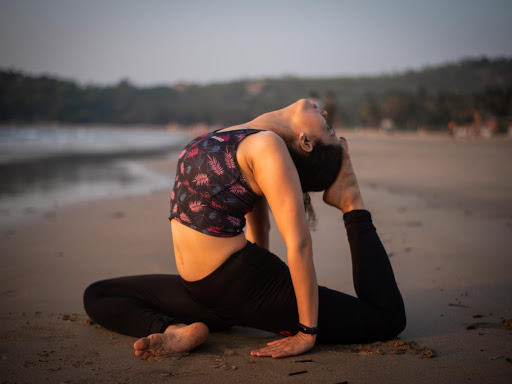
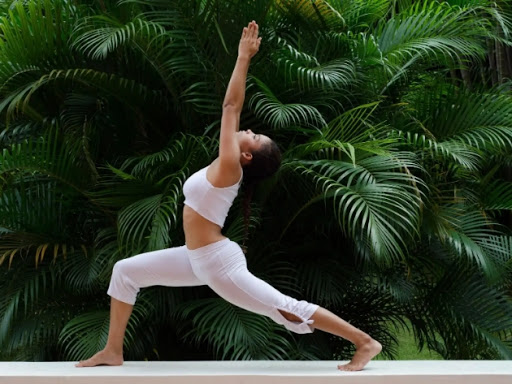
It activates your muscles and joints, making your body more relaxed for the rest of the day. This is important because body and mind are connected: if your body is tense, your mind will be too. Conscious breathing will not only awaken your body but also your mind. Being present in the here and now, instead of thinking about all the tasks ahead of you and getting overwhelmed earlier than necessary, will help you to face the day in a positive way. It relieves stress and anxiety. Practicing yoga releases endorphins, better known as the happiness hormone. And if you do it in the morning instead of in the afternoon, you can enjoy the feeling of relaxation throughout the day. It increases the body's energy, as well as positive energy and a good mood. The benefits of morning yoga work like a chain that will make you see your day from another perspective and will increase your sense of well-being. Yoga, like any other sport or discipline, requires constancy and self-knowledge. Practicing in the morning or in the afternoon, yoga will help you grow on a physical and personal level. But doing it in the morning will help you to be much more aware of your body and mind during the practice and will give another color to your day. In short, with just 10 minutes a day of morning yoga, you will reduce stress and improve your physical and health levels. I encourage you to add this yoga routine to your mornings, which will help you achieve a lifestyle focuse
Read full post

Top 10 Benefits of Yoga

1. Improves Mental Health and Overall Well-being Yoga can provide a welcomed escape from the hustle and bustle of busy, everyday life. This alone is relaxing. Even just 10 minutes a day can be enough to de-stress and carry a sense of calm with you throughout your day. Many asanas (yoga poses) are designed specifically to improve relaxation 2. Improves Quality and Quantity of Sleep A good night’s rest is imperative to overall good health and well being, and many adults aren’t getting enough sleep every night 3. Increases Energy Yoga, like many types of exercise, can increase your daily energy levels. I can personally attest to this, especially when I do yoga first thing in the morning. Unlike more intense forms of exercise  4. Builds Strength Yoga is a great example of an effective bodyweight exercise that can build strength just as efficiently (if not more) as lifting weights. Many adults have 150+ pounds of bodyweight 5. Increases Flexibility Want to feel more youthful and get rid of that stiff, achy feeling in your limbs? Many exercise programs neglect the importance of a good stretch. 6. Lowers Blood Pressure Yoga has been clinically proven to help patients dealing with high blood pressure. 7. Improves Diet Yoga encourages participants to eat better by making them more mindful 8. Improves Immunity It’s true, doing yoga can actually help the body fight off illness. 9. Supports Joint Health All the stretching and strength-building re

Read full post

The heart feeds itself first.

Power yoga, corporate During the stay-at-home orders I have been conscientious about how I spend my spare time (there is actually no such thing as “spare” time-- but that’s a different blog post!)  As I knew there was no lack of work to be done (we’re up-leveling many aspects of our business in preparation for reopening) and since I value rest-- I resisted the (ok, not that strong anyway) urge to learn to crochet or bake my own bread, like seemingly everyone I follow on Instagram. There was one opportunity though, that I knew I wanted to invest my attention in. For 6 days in a row, I got to peek into the lab of Gil Hedley, famed Integral Anatomist. Gil studies human anatomy by dissecting cadavers. His goal seems not only to be exploring what he calls “inner space” but also to help laymen cultivate an appropriate level of awe and appreciation for our bodies. Gil’s perspective is interested in connections and continuity, and aligns perfectly with the teachings of yoga. For the first time ever, Gil was allowing viewers to tune in online to 1 hour per day of what is usually an intensive full-time week of dissection in his lab.  So when I got his email invite, I was doing it! One of the most special moments of the week was getting a closer look at the human heart. Gil actually calls what’s in our chest the “heart center” since the whole organ is more like a “heart-tree,” whose branches extend throughout the body in over 60,000 miles of blood

Read full post

How to Use Your Breath In Asana Practice

While priorities may differ between styles and teachers, when to inhale and exhale during asana is a fairly standardized practice element. Here, Cole offers three simple guidelines for pairing breath with types of poses. When bending forward, exhale. When you exhale, the lungs empty, making the torso more compact, so there is less physical mass between your upper and lower body as they move toward each other. The heart rate also slows on the exhalation, making it less activating than an inhalation and inducing a relaxation response. Since forward bends are typically quieting postures, this breathing rule enhances the energetic effects of the pose and the depth of the fold. upward facing dog pose, urdhva mukha svasana When lifting or opening the chest, inhale. In a heart-opening backbend, for instance, you increase the space in your chest cavity, giving the lungs, rib cage, and diaphragm more room to fill with air. And heart rate speeds up on an inhalation, increasing alertness and pumping more blood to muscles. Plus, “Deep inhalation requires muscular effort that contributes to its activating effect,” Cole says. Poses that lift and open the chest are often the practice’s energizing components, so synchronizing them with inhalations takes optimum advantage of the breath’s effects on the body. When twisting, exhale. In twists, the inhalation accompanies the preparation phase of the pose (lengthening the spine, etc.), and the exhalat

Read full post

Yoga is an ancient practice with origins stretching back thousands of years in India. It is desig…

Yoga is an ancient practice with origins stretching back thousands of years in India. It is designed to help achieve a more positive outlook on life and a focused, permanent sense of serenity and peace. The word ‘yoga’ itself means ‘union’ and ‘union with the divine’; however, many people have stripped away the spirituality and focus of yoga so that most think of it as a group of intensely athletic people putting their legs behind their heads and curling up into jaw-dropping positions. While that certainly happens–I’ve actually done the leg behind the head thing a few times, but only after years of careful stretches and practice–yoga has so much more to offer than flexibility and the idea of garnering a strong body. People of all shapes, sizes, ages and abilities can do yoga and adapt it to suit their individual tastes and needs. If you think yoga might not be for you, I urge you to reconsider. Here are seven of my top reasons why you should start doing yoga as soon as you can. 1. It’s a great workout. First of all and most obviously, yoga is a fantastic workout for your body. You can adapt the practices to your own speed and level of comfort. No matter which yoga exercises you choose, the practices will always be part of a great workout routine. There are some fantastic series of movements out there that are perfect for every kind of day and for every kind of person, meaning there’s no reason not to start doing some yoga as soon as you can. As the country battles the Co

Read full post

Hill explained that due to gamers experiencing high stress situations, it is important to manage…

Hill explained that due to gamers experiencing high stress situations, it is important to manage that stress. "Gamers are shoved into high stress situations quite frequently. Every tournament is all or nothing to the player and his/her team. The player is responsible for their action in securing the win and to the relationships with the other members. This is a tough thing to manage on its own nevermind the constant drive to be better than yesterday. Anything from a mishap in game or an argument with a teammate can send the player into a downward spiral. The players and coaching staff can be equipped to deal with the inevitable “human” factor. It's not that events should not bother the team, they most certainly should be bothered by things that go wrong. It's that those bothers don’t go further than they need to." He continued: "Esport athletes can benefit more directly to the practice of yoga than the average person. They are often thrust into high stress situations and hours behind a computer will take its toll. The mindfulness aspect of Yoga gives these players the tools to remain calm in emotionally charged situations."  Hill said an hour every day is a nice round number to aim for gamers (or anyone) to reap benefits.  "Although 20 minutes of movement and 10 minutes of silent meditation is definitely a good start for health. What's important is consistency and creating the habits.'" The first thing I would say is find a teacher. Even if it's on YouTube. There are ple

Read full post

Step One

Take the time to practice a few stretches that help to "reorient the head and the shoulders to a neutral position," Rayburn says. You might be wondering: what does neutral position even mean? "For the head and the shoulders, neutral usually means 'move backward.' The head and shoulders tend to drop forward or slouch, so generally they need to be moved toward the back plane of the body," Rayburn says. To do this, try the two stretches below. 1. Clasp your hands behind your back and stretch your chest muscles to move the shoulders back. 2. Clasp your hands behind your head and press your head back (as if into a car headrest) to move the head back to its natural position over the torso. Step Two Practice what Rayburn calls "superhero chest," or making your torso — your lungs, ribcage, chest, and upper back — puffed-up and buoyant, like an inflated balloon. Superhero chest, Rayburn explains, "acts like a bio-scaffolding and it starts the process of allowing the shoulders to relax." Consider it the opposite of a collapsed torso, which he explains forces the head and neck muscles to tighten and hold you up from the outside. Step Three "The third step is then relaxing the outer shoulder and neck muscles down onto the buoyant structure you created and maintain," Rayburn says. "The key is not allowing the torso to collapse as the shoulders and neck muscles relax down away from the ears. Too much of either (the inner lift and the outer softening) will result in the ne

Read full post

In today's stressful life, many people have problems of sleeplessness. Due to which the problem…

In today's stressful life, many people have problems of sleeplessness. Due to which the problem of high BP and hypertension begins to take birth. Also, the body also does not get proper rest. But with the help of Yogasan, the problem of sleeplessness can be overcome. Just do these Yogasanas every morning with rules. In a few days the effect will start to appear. Manual production Stretching in the body is done by doing Hastapadasana daily. Due to which blood circulation increases in the body. This asana provides relief in nervous system recovery and back pain. Balasan It is also called child pose. By doing this asana, along with curing backache, it also cures the nervous system. Due to which the problem of sleeplessness is overcome. Baronagon This posture is also called butterfly posture. This asana helps in eradicating the fatigue caused by standing continuously. Also, by doing this asana, you get relief from pain in the joints of inner Thai, knees and feet. Because of which sleep is good. Opposite posture To do this asana, lie down comfortably on a yoga mat. Now, keep your hands on the ground and start raising the legs upwards. Raise the feet to such a height that an angle of 90 degrees is made. Along with the legs, lift the buttocks upwards and keep a pillow under it. Now you can stay in this state for about five minutes. Many yoga disorders can be overcome through yoga. Its regular practice reduces body fat and relieves a lot of diseases. Matsyas

Read full post

While yoga has very much gained traction in recent years, both in the west and here, it dates bac…

While yoga has very much gained traction in recent years, both in the west and here, it dates back to historic times. Back then, yoga was not simply accomplishing a complex pose and holding it just long enough to get that perfect picture for Instagram, but a spiritual and meditative journey. Yes, it did consist of asanas even back then, but the focus was on your spiritual, mental, and emotional health.  This popularization of yoga we see now is very removed from that idea. Yoga is often used as just another form of exercise and not a journey. The asanas are seen as stand-alone poses without much thought into the historical aspect behind them.  A common understanding between practitioners is that yoga doesn’t just tone up and make the body flexible, but it also has that effect on the mind. It is said that the more physically flexible a person is, the more likely they are to be flexible mentally. This means having a strong self of self and conviction yet being open to new ideas and thoughts without being judgmental.This is an extremely important personality trait to have, especially in today’s age where the world is connected more than it has ever been. You can sit here in India and have an intense bond with someone in Los Angeles. This means that we are exposed to different ways of thinking and living than any generation before has ever been. We have the world at our fingertips and the only way to navigate that is through sensitivity and acceptance.  Yoga teaches us all thi

While yoga has very much gained traction in recent years, both in the west and here, it dates bac… post imageRead full post

The instructor touted the class as a celebration of all bodies, but all my body felt was embarras…

The instructor touted the class as a celebration of all bodies, but all my body felt was embarrassment. I imagined that every pastel-wearing dance mom was judging me, that my athletic frame and genetic predisposition to excessive perspiration did not belong in the room. After class, I rushed out and swore to never return. As a former field hockey player and current cycling instructor, I vowed to stick to what I know: HIIT, cycling, strength training, and the occasional run. I’d do yoga, but only if it was in a candlelit room so that nobody could see me flailing as I made my way from a power lunge to Warrior III. This routine was working for me for a while. I’d go from taking an early morning HIIT class to work, or from work to teach a cycling class. Recovery? Maybe a hot yoga class once a week. Stretching? Didn’t know her. And then, boom. The coronavirus pandemic hit in early March and effectively uprooted our lives. I lost my teaching job once the gyms closed and thus my access to an indoor cycling bike. I moved back in with my parents and set up my home gym in the basement: A few dumbbells and kettlebells my dad snagged from his small company fitness center, two-pound ankle weights from 1986, some resistance bands I found at Marshall’s pre-coronavirus, and my yoga mat. I would go down to my “gym” after work and do an intense 45-minute HIIT workout, sometimes four times a week. I also did frequent jogs, despite painful shin splints. I hosted live workouts on Instagram and

Read full post

SIGN UP

Fitness July 8, 2020 Sarah Madaus This Is a Love Letter to At-Home Workouts Quarantine has taught me to push myself out of my comfort zone.  Picture of adult woman practising yoga at home Kamil Macniak/Adobe Stock After work one evening last fall, I decided to use up my remaining ClassPass credits on a barre class nearby. I had taken barre a few times before with varying degrees of success, so I felt at least decently prepared for what was to come. The instructor, an energetic, tall woman wearing branded leggings, a matching sports bra, and the grippy socks they always try to sell you, gave me a rundown of the class after I told her I’d never visited the studio before. It sounded fine, fun even. But as we got started, I realized that it was Not Fine and also Not Fun. I have the flexibility of a steel beam, so every lift, pulse, and plie was met with the snap, crackle, and pop of a different body part. I couldn’t keep up with the speed at which sumo squats were being performed and was always two steps behind during the rhythmic aerobic portions of class. The instructor touted the class as a celebration of all bodies, but all my body felt was embarrassment. I imagined that every pastel-wearing dance mom was judging me, that my athletic frame and genetic predisposition to excessive perspiration did not belong in the room. After class, I rushed out and swore to never return. As a former field hockey player and current cycling instructor, I vowed to stick to w

Read full post

While yoga has very much gained traction in recent years, both in the west and here, it dates bac…

While yoga has very much gained traction in recent years, both in the west and here, it dates back to historic times. Back then, yoga was not simply accomplishing a complex pose and holding it just long enough to get that perfect picture for Instagram, but a spiritual and meditative journey. Yes, it did consist of asanas even back then, but the focus was on your spiritual, mental, and emotional health.  This popularization of yoga we see now is very removed from that idea. Yoga is often used as just another form of exercise and not a journey. The asanas are seen as stand-alone poses without much thought into the historical aspect behind them.  A common understanding between practitioners is that yoga doesn’t just tone up and make the body flexible, but it also has that effect on the mind. It is said that the more physically flexible a person is, the more likely they are to be flexible mentally. This means having a strong self of self and conviction yet being open to new ideas and thoughts without being judgmental. This is an extremely important personality trait to have, especially in today’s age where the world is connected more than it has ever been. You can sit here in India and have an intense bond with someone in Los Angeles. This means that we are exposed to different ways of thinking and living than any generation before has ever been. We have the world at our fingertips and the only way to navigate that is through sensitivity and acceptance.  Yoga teaches us all th

While yoga has very much gained traction in recent years, both in the west and here, it dates bac… post imageRead full post