Skip to content
Delhi, Delhi, 110014

Business hours

Happiness yoga

Monday
5am-10pm
Tuesday
5am-10pm
Wednesday
5am-10pm
Thursday
5am-10pm
Friday
5am-10pm
Saturday
5am-10pm
Sunday
5am-10pm

You can anytime during the day with your query.

+919953224615

Latest Posts & Updates

Fresh stories, announcements and offers about Yoga Instructor, straight from our business.

Why is flexibility important?

Increasing your flexibility is good for you in many ways. Some of the most important benefits include: Greater range of motion. Increased flexibility makes it easier to move your joints in a normal direction with less effort. Less muscle tension. Stretching your muscles can help release tension and tightness, making it easier to move. Better posture. Tight, tense muscles can lead to muscle strain and poor posture. Less pain. When your muscles aren’t tense, there’s usually less stress and pressure on certain parts of your body and, as a result, less pain in your back, neck, and shoulders. Lower risk of injuries. Greater strength and flexibility in your muscles and joints may make you less prone to injuries. Less stress. When tension is released in your muscles, it may help you feel more relaxed. In turn, that may lower your stress levels. Improved circulation. Better blood flow may help your muscles recover more quickly after a workout and also prevent stiffness. Best yoga poses for improved flexibility If you’re interested in trying a yoga class to increase your flexibility, Hatha, Vinyasa, or Yin styles are all good options. If you’re short on time, or would prefer to practice some yoga poses at home, the following poses can be especially helpful for stretching many of your major muscles and boosting flexibility. With each pose, go at your own pace. Focus on how the pose feels instead of how it looks. You can repeat each pose as many times a

Read full post

Benefits of Yoga in WOMEN

. Productivity Enhancement Studies have shown that doing at least twenty minutes of yoga every day can help a person focus better, eventually leading to better decision making. Better focus also means better memory. 2. Muscle Building Hitting the gym and lifting weights is not the only way to build muscle! Yoga teaches you how to use your resistance and body weight to build muscles. It helps build muscle faster, as Yoga also helps regulate the flow of blood. 3. Breaks Boundaries If you are worried about not being able to handle some of the postures in yoga, you should relax and give it a shot. Yoga will push your limits and will help break boundaries and limitations. It presents a challenge where you push your physical limit with a calm attitude. The whole point is to be able to better yourself. 4. Relieves Stress Yoga is known to help in relieving stress. The breathing exercises that yoga incorporate will teach you how to be calm in situations that would normally cause you a lot of stress. Through some of the poses that you need to learn and physical challenges that they present, you will be able to de-stress and relax Amazing Benefit of Yoga for Your Entire Family

Benefits of Yoga in WOMEN post imageRead full post

What Are the Benefits of Stretching & Yoga?

Stretching exercises and yoga are somewhat synonymous in that yoga routines include stretching movements, but you can do stretching activities without them being yoga exercises. Stretching and yoga yield a variety of benefits, including relief from chronic and acute conditions. Flexibility Improved flexibility, which refers to how much a muscle lengthens, is a key benefit from stretching and yoga movements. Everyday tasks like tying your shoes, reaching for items in cabinets and lifting objects can become easier. Similarly, muscle coordination can improve with regular stretching and yoga practice. All of these benefits become even more important as you get older since muscles naturally become tighter and shorter over the years. Yoga and stretching are ways to keep those muscles loose and limber. Range of Motion Stretching and yoga can keep the body’s joints, tendons and ligaments lubricated and can improve range of motion. Range of motion refers to the distance your joints are able to move their corresponding limbs. An increased range of motion from stretching allows you more mobility and agility. Increased agility provides better balance and reaction time when dealing with instability. These benefits are important at any age, but especially critical as you get older.

What Are the Benefits of Stretching & Yoga? post imageRead full post

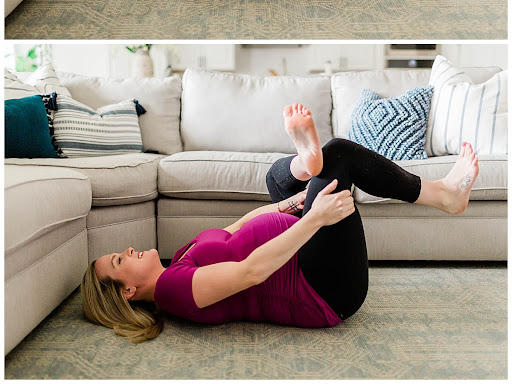
[4/7, 11:45 AM] Happiness Yoga At Home ,C: What does it mean to have tight hips?

A feeling of tightness across the hips comes from tension around the hip flexors. The hip flexors are a group of muscles around the top of the thighs that connect the upper leg to the hip. These muscles allow you to bend at the waist and raise your leg. Some of the main hip flexors are the: Iliopsoas rectus femoris tensor fasciae latae sartorius Many people have tight hips, from people who spend several hours a day sitting to regular gym-goers and professional athletes. Some people are more prone to tightness in that area of their body, too. Tight hips may put you at increased risk for injury due to the increased demands on tissues that aren’t moving properly. Read on to learn more about tight hips and what you can do to relax these muscles. [4/7, 11:46 AM] Happiness Yoga At Home ,C: You can use a foam roller to loosen up tight hips. Lie face down, with your foam roller beneath and slightly below your right hip. Place your left leg to the side with the knee bent at a 90-degree angle. Rest your forearms on the ground in front of you to take some of your body weight off of your hip. This will make the stretch less painful. Stretch your right leg straight out behind you, with your toes pointed backward and the front of your foot flat against the ground Slowly move backward and forward over the foam roller. For an extra stretch, add some side-to-side movement as you roll. Continue for up to 30 s

[4/7, 11:45 AM] Happiness Yoga At Home ,C: What does it mean to have tight hips? post imageRead full post

What is power yoga?

As the name suggests, power yoga is focused on building strength and endurance. It is also an excellent form of yoga for burning calories. Although power yoga isn’t an official type of yoga, the term is sometimes used interchangeably with Vinyasa yoga. It’s probably more accurate to say that power yoga is a form of Vinyasa, which has its roots in Ashtanga yoga, an established practice that began in the early 20th century. With power yoga, the emphasis is on the flow from one pose to the next, rather than approaching each pose separately. The poses aren’t disconnected from each other, unlike some other forms of yoga. No matter what you call it, power yoga is a fast-paced and intense activity. You move from one posture to another rapidly, linking your breathing to the different motions of your body. A power yoga class may seem more like an aerobics class than a relaxed, mindful yoga experience. Though it requires mindfulness and focus on your breathing, power yoga is more dynamic than meditative. What are the key differences between power yoga and other types of yoga? Power yoga differs from other types of yoga in a few important ways. Let’s look at these differences more closely. Speed Unlike Hatha yoga, the most common form of yoga practiced in the United States, power yoga moves at a much faster pace. Hatha yoga focuses on poses and breathing at a slower, more deliberate pace than power yoga. The slower speed of Hatha yoga, and other form

Read full post

Power yoga

What is power yoga? As the name suggests, power yoga is focused on building strength and endurance. It is also an excellent form of yoga for burning calories. Although power yoga isn’t an official type of yoga, the term is sometimes used interchangeably with Vinyasa yoga. It’s probably more accurate to say that power yoga is a form of Vinyasa, which has its roots in Ashtanga yoga, an established practice that began in the early 20th century. With power yoga, the emphasis is on the flow from one pose to the next, rather than approaching each pose separately. The poses aren’t disconnected from each other, unlike some other forms of yoga. No matter what you call it, power yoga is a fast-paced and intense activity. You move from one posture to another rapidly, linking your breathing to the different motions of your body. A power yoga class may seem more like an aerobics class than a relaxed, mindful yoga experience. Though it requires mindfulness and focus on your breathing, power yoga is more dynamic than meditative. What are the key differences between power yoga and other types of yoga? Power yoga differs from other types of yoga in a few important ways. Let’s look at these differences more closely. Speed Unlike Hatha yoga, the most common form of yoga practiced in the United States, power yoga moves at a much faster pace. Hatha yoga focuses on poses and breathing at a slower, more deliberate pace than power yoga. The slower speed of Hatha yoga, and other form

Read full post

What is power yoga?

As the name suggests, power yoga is focused on building strength and endurance. It is also an excellent form of yoga for burning calories. Although power yoga isn’t an official type of yoga, the term is sometimes used interchangeably with Vinyasa yoga. It’s probably more accurate to say that power yoga is a form of Vinyasa, which has its roots in Ashtanga yoga, an established practice that began in the early 20th century. With power yoga, the emphasis is on the flow from one pose to the next, rather than approaching each pose separately. The poses aren’t disconnected from each other, unlike some other forms of yoga. No matter what you call it, power yoga is a fast-paced and intense activity. You move from one posture to another rapidly, linking your breathing to the different motions of your body. A power yoga class may seem more like an aerobics class than a relaxed, mindful yoga experience. Though it requires mindfulness and focus on your breathing, power yoga is more dynamic than meditative. What are the key differences between power yoga and other types of yoga? Power yoga differs from other types of yoga in a few important ways. Let’s look at these differences more closely. Speed Unlike Hatha yoga, the most common form of yoga practiced in the United States, power yoga moves at a much faster pace. Hatha yoga focuses on poses and breathing at a slower, more deliberate pace than power yoga. The slower speed of Hatha yoga, and other .

Read full post

Prenatal Yoga: The Perfect Pregnancy ExerciseWhat is prenatal yoga?

Yoga is a form of exercise and meditation where breath and specific body positions are used to help connect the mind and body. Prenatal yoga focuses on positions that are specifically designed for pregnant women’s bodies. How is prenatal yoga different from regular yoga? Common positions in regular yoga — such as those where your feet are spread far apart — may be too stressful for your joints and pelvic area when you’re expecting. As your baby grows, there’s a lot more weight pushing down on your bladder and pelvis.Can prenatal yoga be the first time I ever do yoga? Yes! You don’t have to be a yogi before you conceive to jump on the prenatal yoga bandwagon. As long as your doctor has given you the green light to stay physically active during pregnancy, yoga is an ideal activity for all expectant moms: It’s gentle and designed for pregnancy, which means it helps prepare you for the mental aspects of childbirth (and beyond). But remember, it’s always a good idea to check with your practitioner before starting any new exercise during pregnancy. What to expect in a pregnancy yoga class In a prenatal yoga class, you’ll likely be encouraged to use accessories (bolsters, blocks, wedges or folded blankets) to achieve the proper alignment. You can typically expect:An introduction. Your yoga teacher will want to know your name, how far along you are, any aches and pains you're having, and what body parts or poses .

Prenatal Yoga: The Perfect Pregnancy ExerciseWhat is prenatal yoga? post imageRead full post

Prenatal Yoga: The Perfect Pregnancy ExercisePrenatal Yoga: The Perfect Pregnancy ExerciseWhat is…

Prenatal Yoga: The Perfect Pregnancy ExercisePrenatal Yoga: The Perfect Pregnancy ExerciseWhat is prenatal yoga? Yoga is a form of exercise and meditation where breath and specific body positions are used to help connect the mind and body. Prenatal yoga focuses on positions that are specifically designed for pregnant women’s bodies. How is prenatal yoga different from regular yoga? Common positions in regular yoga — such as those where your feet are spread far apart — may be too stressful for your joints and pelvic area when you’re expecting. As your baby grows, there’s a lot more weight pushing down on your bladder and pelvis.Can prenatal yoga be the first time I ever do yoga? Yes! You don’t have to be a yogi before you conceive to jump on the prenatal yoga bandwagon. As long as your doctor has given you the green light to stay physically active during pregnancy, yoga is an ideal activity for all expectant moms: It’s gentle and designed for pregnancy, which means it helps prepare you for the mental aspects of childbirth (and beyond). But remember, it’s always a good idea to check with your practitioner before starting any new exercise during pregnancy. What to expect in a pregnancy yoga class In a prenatal yoga class, you’ll likely be encouraged to use accessories (bolsters, blocks, wedges or folded blankets) to achieve the proper alignment. You can typically expect:An introduction. Your yoga teacher will want to know your name, how far along you are, any aches and pains

Read full post

Garland Pose (Malasana)

Malasana can strengthen the pelvic floor and abdominal core while opening the hips. Bhanote says this can benefit individuals with PCOS by increasing circulation and blood flow to the pelvic region, improving metabolism, and aiding digestion. You can use a block or two under your glutes for support until your body becomes familiar with this position. Start with feet about a mat’s width apart. Bend your knees and lower your buttocks toward the floor to come into a squat position. Bring your hands in prayer position (anjali mudra). You can allow your thumbs to touch your sternum to help keep the chest lifted. Press your upper arms/triceps inside of your knees and stay engaged with spine straight (elbows press into knees to open the hips). Extend the low back and draw shoulder blades toward one another. Remain in this position for up to 5 breaths. Come out of it by straightening your legs. Repeat the pose for a total of three times.

Garland Pose (Malasana) post imageRead full post

Can Yoga Relieve Symptoms of PCOS?How yoga benefits symptoms of PCOS

Although yoga cannot cure PCOS, it may help with some of the symptoms. Yoga may decrease testosterone levels According to a recent study, practicing yoga may help decrease testosterone levels and alleviate symptoms of anxiety and depression in women with PCOS. More specifically, participants who did a one-hour yoga class three times a week for three months reduced testosterone levels by 29 percent. In the study, researchers randomly assigned 31 women with PCOS between 23 and 42 years of age to either a mindful yoga group or control group. Classes happened three times a week for one hour each, for a total of three months. Participants’ endocrine, cardiometabolic, and psychological measurements were taken initially, and then again after three months.Although positive changes in PCOS symptoms and anxiety levels can occur with any moderate aerobic exercise, yoga is accessible for many fitness levels and a wide range of ages. This is not always the case with other forms of exercise like swimming, cycling, walking, or running. Plus, yoga has a mindfulness component that helps promote relaxation and balance moods. Monisha Bhanote, MD, FASCP, FCAP, triple board-certified physician, and Yoga Medicine instructor, says that adding an integrative approach to women with PCOS can be beneficial as individuals can show an increased prevalence of depression and anxiety. “These mood disorders may be directly related .

Read full post